
Kumarakom Tourism refers to the travel and hospitality ecosystem centered around Kumarakom, a scenic village destination in Kerala known for its backwaters, lakes, bird sanctuary, luxury resorts, and traditional Kerala culture.
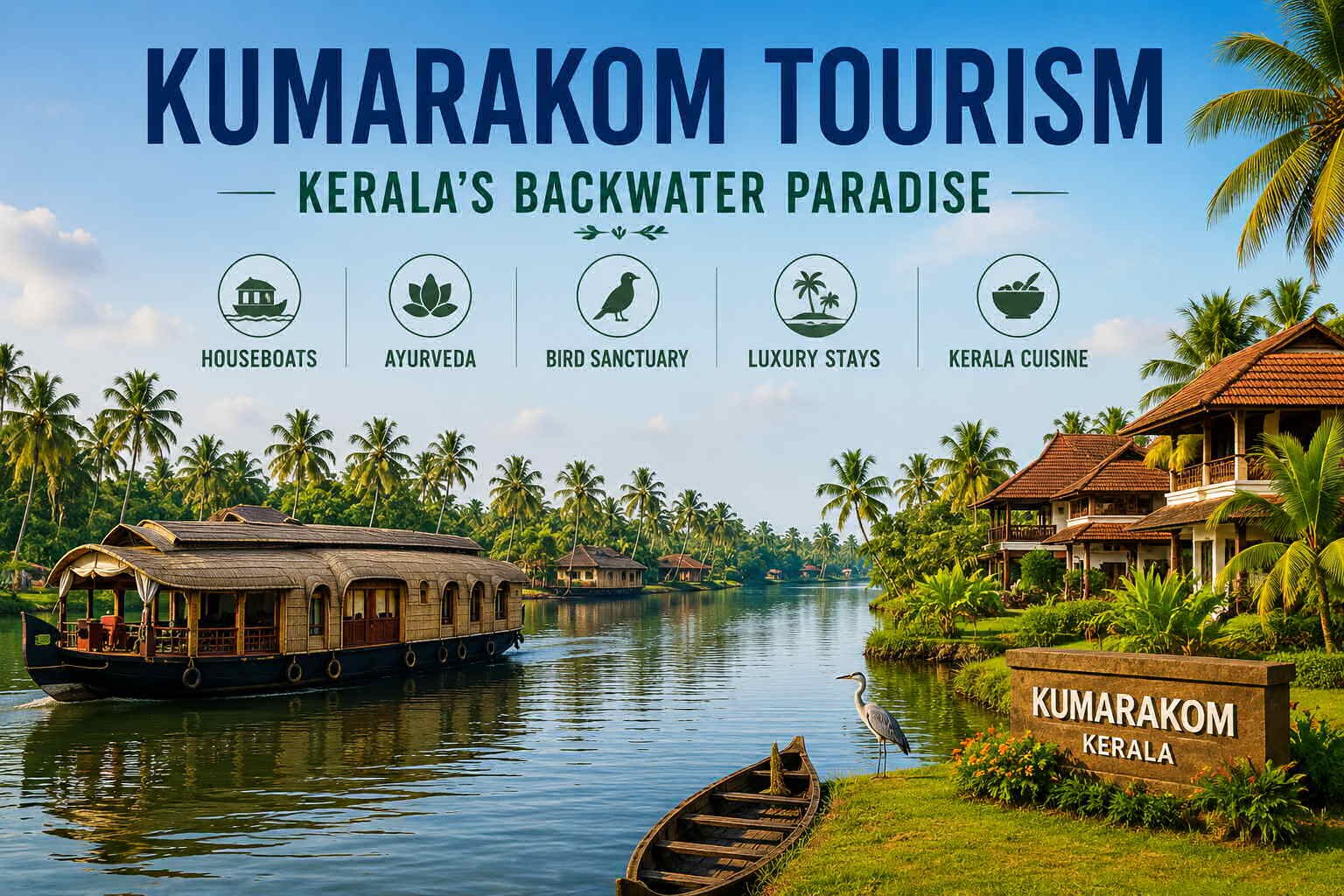
Situated near Kottayam in the Indian state of Kerala, Kumarakom has evolved from a quiet farming and fishing region into one of South India’s most recognized tourism destinations. Its growth has been closely linked to the popularity of Kerala’s backwater tourism industry and the global demand for wellness and nature-based travel experiences.
Unlike crowded urban tourist centers, Kumarakom is primarily associated with slow-paced tourism. Visitors typically travel to the region for relaxation, houseboat cruises, Ayurveda therapies, village life experiences, and lakefront stays. The destination is especially known for combining natural beauty with high-end hospitality.
Tourism in Kumarakom also reflects broader trends in modern travel. Travelers increasingly seek destinations that offer sustainability, local culture, wellness, and immersive experiences rather than only sightseeing. Kumarakom fits this model because it combines ecological richness with authentic rural traditions.
Today, Kumarakom attracts honeymooners, families, birdwatchers, wellness travelers, photographers, and international tourists throughout the year. It is also an important contributor to Kerala’s tourism economy and hospitality employment sector.
Kumarakom Tourism is built around the interconnected ecosystem of lakes, canals, wetlands, paddy fields, coconut groves, and villages that form part of Kerala’s famous backwaters.
At the center of this ecosystem is Vembanad Lake, the largest lake in Kerala. The lake connects multiple tourism destinations, including Alappuzha, Kumarakom, and parts of Kochi. The calm waterways create ideal conditions for houseboat tourism, canoe experiences, and waterfront resorts.
Historically, Kumarakom was a small agricultural and fishing village. Transportation largely depended on waterways rather than roads. Local communities used traditional boats for trade, farming, and daily travel. Over time, travelers began visiting the region because of its natural beauty and unique water-based lifestyle.
The development of Kerala’s tourism industry during the 1980s and 1990s significantly increased Kumarakom’s visibility. Government tourism campaigns promoting “God’s Own Country” positioned Kerala as a premium destination for backwaters, Ayurveda, and eco-tourism. Kumarakom quickly became one of the flagship destinations in that campaign.
Luxury hospitality brands also played an important role. Several lakefront resorts transformed the region into a premium wellness and leisure destination. At the same time, local entrepreneurs developed homestays, shikara rides, fishing tours, and cultural experiences that made tourism more accessible to different traveler segments.
One reason Kumarakom became globally recognized is its balance between nature and comfort. Travelers can experience traditional Kerala village life while staying in luxury accommodations equipped with modern amenities.
The tourism model in Kumarakom can be broadly understood through five major pillars:
These sectors work together to create a complete destination experience.
Backwater tourism is the foundation of Kumarakom’s popularity. The interconnected canals and lake systems allow visitors to explore Kerala’s water-based geography in a peaceful environment.
Houseboats, traditionally known as “Kettuvallams,” were originally used to transport rice and goods across Kerala’s waterways. Today, many have been converted into floating hotels with bedrooms, dining areas, air conditioning, and viewing decks.
Tourists often choose overnight cruises that include:
Smaller boats, including shikaras and canoes, are also widely used for shorter and more eco-friendly experiences.
Kumarakom is also strongly associated with Ayurveda tourism. Ayurveda is a traditional Indian medical system focused on balance between body, mind, and environment.
Many resorts in Kumarakom offer:
International tourists often combine backwater holidays with wellness retreats lasting several days or weeks.
The wetlands surrounding Kumarakom support rich biodiversity. This has helped position the region as an eco-tourism destination.
The Kumarakom Bird Sanctuary is one of the area’s major attractions. Migratory birds arrive seasonally from different parts of the world, attracting birdwatchers and photographers.
Commonly spotted species include:
Eco-tourism initiatives in Kumarakom focus on conservation, responsible tourism, and community participation.
Houseboat tourism is the most recognizable segment of Kumarakom Tourism.
Modern houseboats range from budget vessels to luxury floating villas. Many include private chefs, sundecks, Jacuzzis, and premium hospitality services.
A typical houseboat experience includes:
Houseboat tourism contributes significantly to local employment, including boat operators, chefs, guides, mechanics, and fishermen.
However, environmental concerns have also emerged. Authorities increasingly regulate waste disposal, fuel usage, and boat traffic to protect the fragile ecosystem.
Kumarakom has become one of Kerala’s leading luxury hospitality markets.
Lakefront resorts attract high-spending travelers seeking privacy, wellness, and nature-based experiences. Many properties incorporate traditional Kerala architecture with modern luxury design.
Key features often include:
Luxury tourism has helped raise the global profile of Kumarakom while also increasing investment in infrastructure and hospitality training.
Homestays provide a more local and affordable tourism experience.
Families open parts of their homes to travelers and often provide home-cooked Kerala meals and cultural interaction. This model supports community-based tourism and distributes tourism income more directly to local residents.
Homestay experiences may include:
Many travelers prefer homestays because they offer a deeper understanding of Kerala village life.
Wellness tourism has become a major economic driver in Kumarakom.
Ayurveda centers offer specialized therapies focused on stress relief, detoxification, pain management, and rejuvenation. Some visitors specifically travel to Kumarakom for long-duration wellness programs.
Popular treatments include:
The combination of calm surroundings and traditional healing practices makes Kumarakom particularly attractive for wellness-focused travel.
The Kumarakom Bird Sanctuary is a protected ecological zone spread across wetlands and mangrove areas.
Nature tourism activities include:
The sanctuary strengthens Kumarakom’s identity as a sustainable tourism destination.
Kerala cuisine is an important part of the tourism experience in Kumarakom.
Tourists often seek authentic regional dishes prepared using local spices, coconut, freshwater fish, and traditional cooking methods.
Popular dishes include:
Many resorts and homestays now offer culinary experiences and cooking workshops.
Consider a hypothetical traveler from Europe planning a two-week vacation focused on wellness and nature.
The traveler arrives in Kochi and transfers to Kumarakom by road. After checking into a lakefront resort, the visitor spends the first few days participating in Ayurveda therapies and yoga sessions.
Later in the trip, the traveler books an overnight houseboat cruise through the backwaters. During the journey, the guest observes village life, sees fishermen working in the canals, and enjoys traditional Kerala meals prepared onboard.
The visitor also explores the Kumarakom Bird Sanctuary during the early morning hours with a local guide. A homestay visit introduces the traveler to local cooking techniques and coconut farming practices.
By the end of the trip, the tourist has experienced multiple dimensions of Kumarakom Tourism:
This integrated experience explains why Kumarakom remains one of Kerala’s most successful tourism destinations.
Tourism is one of the primary economic activities in Kumarakom.
The industry supports thousands of direct and indirect jobs across sectors such as:
Tourism revenue also contributes to regional infrastructure improvements, including roads, sanitation, and water transport facilities.
Additionally, tourism has encouraged entrepreneurship among local residents. Many families operate:
The tourism sector therefore functions as both an economic engine and a cultural preservation mechanism.
Despite its success, Kumarakom Tourism faces several environmental and operational challenges.
Increased boat traffic and tourism activity can contribute to water pollution if waste management systems are inadequate.
Authorities and tourism operators increasingly emphasize:
Rapid construction of resorts and tourism infrastructure can threaten fragile ecosystems.
Unregulated development may impact:
Balancing tourism growth with ecological preservation remains essential.
Tourism demand fluctuates during monsoon and peak travel seasons. Businesses often experience revenue instability during off-season periods.
Many operators now promote monsoon tourism and wellness retreats to create year-round demand.
Rising temperatures, changing rainfall patterns, and flooding risks could affect backwater ecosystems in the future.
Climate resilience has therefore become an important topic in Kerala tourism planning.
Kumarakom is famous for its backwaters, houseboats, bird sanctuary, luxury resorts, and Ayurveda wellness tourism. The destination is located on the banks of Vembanad Lake in Kerala and is widely known for peaceful water-based travel experiences.
It is also recognized as one of India’s leading eco-tourism and slow-travel destinations.
The most popular tourism season in Kumarakom is between October and March because the weather is cooler and more comfortable for outdoor activities.
However, monsoon tourism has also gained popularity. Many travelers visit during the rainy season to experience Kerala’s greenery, Ayurveda therapies, and dramatic backwater scenery.
Yes. Kumarakom is considered highly suitable for families because it offers a calm and safe tourism environment.
Families can enjoy houseboat stays, village tours, birdwatching, cultural performances, and lakefront resorts. Many hotels also provide child-friendly activities and nature-based experiences.
The future of Kumarakom Tourism will likely depend on sustainable growth strategies.
Modern travelers increasingly prioritize:
Kumarakom already aligns strongly with these trends.
Technology is also changing the tourism landscape. Online booking systems, digital marketing, virtual tourism content, and AI-driven hospitality services are helping local businesses reach global audiences more efficiently.
Government tourism policies increasingly focus on sustainability certification, waste reduction, and community-based tourism models. These initiatives aim to preserve Kumarakom’s ecological value while maintaining economic growth.
Additionally, luxury tourism and wellness travel are expected to continue expanding globally. Since Kumarakom is already well-positioned in both segments, the destination may see continued long-term demand from international travelers.
Kumarakom Tourism represents one of Kerala’s most successful examples of nature-based and wellness-oriented travel development. Built around backwaters, Ayurveda, birdlife, and village culture, the destination combines ecological beauty with strong hospitality infrastructure.
Its tourism economy supports thousands of livelihoods while also promoting Kerala’s cultural identity on a global scale. At the same time, environmental sustainability remains critical for preserving the fragile wetland ecosystem that attracts visitors in the first place.
As global travel trends increasingly favor wellness, eco-tourism, and authentic local experiences, Kumarakom is likely to remain one of India’s most important tourism destinations for years to come.