

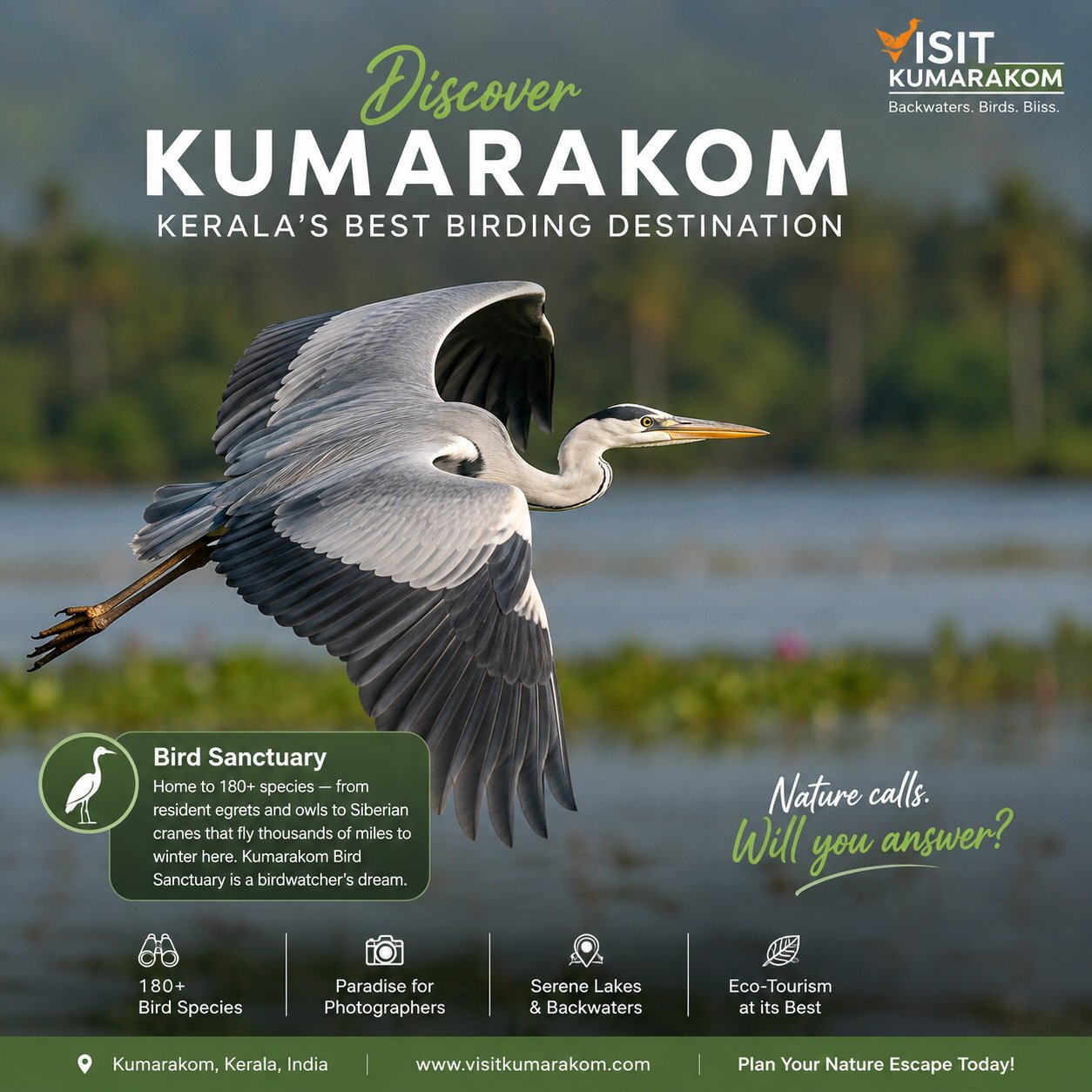

Kumarakom Bird Sanctuary: Discover Kerala’s Best Birdwatching Destination
Discover Kumarakom Bird Sanctuary on the banks of Vembanad Lake. Explore 180+ bird species, migratory birds, birdwatching tips and why Kumarakom is a must-visit Kerala destination.
Kumarakom: Where the Backwaters Come Alive with Wings
Imagine standing beside the tranquil waters of Vembanad Lake as a heron rises from the wetlands, its wings catching the morning light. Somewhere among the trees, an egret calls. A kingfisher flashes across the water. Above the canopy, another bird begins its journey across the Kerala sky.
This is Kumarakom.
Known around the world for its backwaters, traditional village landscapes and peaceful lake experiences, Kumarakom offers another remarkable attraction for travellers who love nature: the Kumarakom Bird Sanctuary.
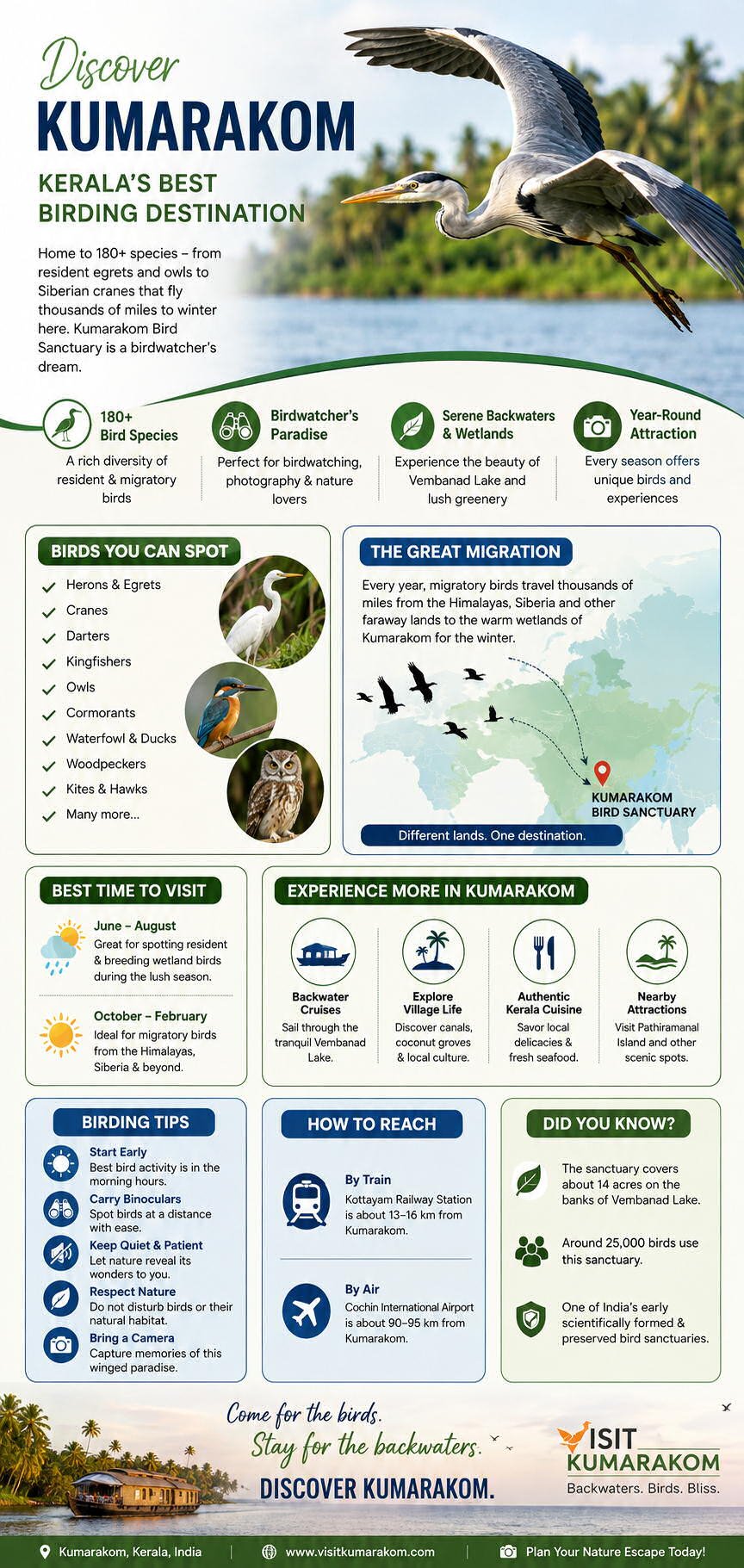
Spread across approximately 14 acres on the banks of Vembanad Lake, the sanctuary is home to around 180 species of birds, including more than 90 species of migratory birds according to Kerala Tourism.
That combination makes Kumarakom much more than a backwater destination. It is a place where the lake, wetlands, mangroves, canals and birdlife come together to create one of Kerala’s most rewarding nature experiences.
If you are searching for a destination where you can combine birdwatching, backwaters, photography, village life and slow travel, Kumarakom deserves a place at the top of your Kerala itinerary.
Why Kumarakom Is a Dream Destination for Birdwatchers
The biggest attraction of Kumarakom Bird Sanctuary is its extraordinary variety of birdlife.
Kerala Tourism records around 180 species in the sanctuary, with about 25,000 birds using the area. More than 90 species are migratory.
The sanctuary’s location explains much of this diversity.
It sits beside the enormous Vembanad Lake, Kerala’s famous backwater ecosystem. Mangroves, wetlands, waterways and vegetation provide food and shelter for a wide range of birds.
The result is an environment where resident birds can be seen throughout the year while migratory visitors arrive during particular seasons.
Birds You May Spot in Kumarakom
Depending on the season and conditions, birdwatchers may encounter:
- Herons
- Egrets
- Cormorants
- Indian darters
- Waterfowl
- Ducks
- Teals
- Cuckoos
- Owls
- Water hens
- Woodpeckers
- Kingfishers
- Moorhens
- Larks
- Flycatchers
- Terns
- Marsh harriers
- Bitterns
- Brahminy kites
Kerala Tourism also lists migratory birds arriving from regions including the Himalayas and Siberia.
This is what makes birdwatching in Kumarakom so fascinating. You are not visiting a conventional enclosure where birds are displayed for visitors. You are entering a living wetland ecosystem.
The Great Migration: Birds That Travel Thousands of Miles
One of the most fascinating aspects of Kumarakom is its connection to the wider migratory bird network.
Birds arrive in Kerala from distant parts of the Indian subcontinent and beyond. Kerala Tourism identifies migratory visitors from places such as the Himalayas and Siberia.
Among the birds traditionally associated with the sanctuary are Siberian cranes and other migratory species.
For travellers, this creates an extraordinary connection between Kumarakom and distant landscapes thousands of kilometres away.
A bird you see resting beside Vembanad Lake may have travelled an astonishing distance to reach these wetlands.
That is one reason Kumarakom is so special for photographers and wildlife enthusiasts.
A Sanctuary Created by Nature and Protected by People
The story of Kumarakom Bird Sanctuary is closely connected with the history of the region.
The area was formerly known as Baker’s Estate. In the 19th century, George Alfred Baker developed land around Kumarakom and planted mangroves along the wetlands. A portion of the property was deliberately left undisturbed.
Over time, birds began using this protected landscape.
The natural environment gradually developed into what is now known as Kumarakom Bird Sanctuary. Kerala Tourism describes the sanctuary as one of India’s early scientifically formed and preserved bird sanctuaries.
The story is a reminder of an important principle in nature tourism: sometimes the best thing people can do for wildlife is simply allow nature to thrive.
Why Vembanad Lake Matters
You cannot understand Kumarakom Bird Sanctuary without understanding Vembanad Lake.
The lake and its surrounding wetlands create a complex ecosystem of open water, canals, marshes, vegetation and mangroves.
These habitats support insects, fish and other forms of aquatic life that become food for birds.
The lake also gives visitors a completely different way to experience Kumarakom.
Traditional boats and houseboats move slowly through the waterways while fishermen work along the banks and birds move between the wetlands.
This is where Kumarakom becomes more than a birdwatching destination.
It becomes a complete nature experience.
The Best Time to Visit Kumarakom Bird Sanctuary
There is no single answer because different seasons offer different birdwatching experiences.
Kerala Tourism identifies June to August as a good period for seeing breeding wetland birds, while other Kerala Tourism material highlights October to February as the migratory bird season.
June to August
This period can be particularly interesting for observing resident wetland birds and breeding activity.
You may encounter:
- Egrets
- Herons
- Darters
- Cormorants
- Kingfishers
- Other waterbirds
The lush landscape also takes on a beautiful monsoon character during this period.
October to February
This is an especially attractive period for travellers interested in migratory birds.
Birds arriving from northern regions add another dimension to the sanctuary’s already diverse bird population. Kerala Tourism identifies the broader October to February period as the migratory bird season around the sanctuary.
For photographers, this season can provide excellent opportunities to observe both resident and migratory species.
What Makes Birdwatching in Kumarakom Different?
Birdwatching is not simply about counting species.
In Kumarakom, the experience is closely connected with the landscape.
You walk through a green environment surrounded by waterways and listen for calls before trying to locate the bird responsible.
You may see a heron standing motionless beside the water, a darter diving for fish or an egret moving through the wetland.
Then, beyond the trees, you may suddenly see Vembanad Lake stretching toward the horizon.
That combination of wildlife and landscape is what makes Kumarakom particularly appealing to nature lovers.
Birdwatching Tips for First-Time Visitors
You do not need to be an expert ornithologist to enjoy Kumarakom Bird Sanctuary.
A few simple preparations can make the experience much better.
Start Early
Bird activity is often rewarding during the cooler hours of the morning.
Early visits also provide softer natural light for photography.
Carry Binoculars
Many birds will remain at a distance.
A pair of binoculars can transform a distant silhouette into a detailed observation.
Bring a Camera With a Zoom Lens
Bird photography requires patience and reach.
A telephoto or zoom lens is more practical than trying to photograph birds from close range.
Wear Comfortable Clothing
Choose lightweight clothing and comfortable footwear suitable for walking through a natural environment.
Keep Noise Low
Birdwatching works best when visitors allow the environment to remain peaceful.
Avoid loud conversations, sudden movements and attempts to approach birds closely.
Be Patient
The best bird sightings cannot be scheduled.
You might spend several minutes looking at an empty branch and then suddenly see a beautiful bird appear.
That is part of the experience.
Kumarakom Is More Than a Bird Sanctuary
One of the strongest reasons to choose Kumarakom as a Kerala holiday destination is the variety of experiences available within a relatively compact destination.
A visit to the bird sanctuary can easily become part of a wider Kumarakom itinerary.
Explore Vembanad Lake
Take a traditional boat or houseboat cruise across the backwaters and experience the landscape from the water.
Discover Kumarakom Village
Explore the canals, coconut groves, village roads and traditional way of life that give Kumarakom its character.
Experience Kerala’s Backwaters
The backwaters remain one of Kerala’s defining travel experiences. Traditional kettuvallams have been transformed into houseboats that allow visitors to explore Vembanad Lake at a relaxed pace.
Explore Pathiramanal
Pathiramanal is a small island in Vembanad Lake known for its natural beauty and birdlife. Kerala Tourism identifies it as another attractive location for observing birds in the Kumarakom region.
Enjoy Local Food
Kumarakom also offers opportunities to experience Kerala’s traditional cuisine, including seafood and local preparations influenced by the region’s relationship with the lake and backwaters.
This combination of wildlife, water, food and village culture gives Kumarakom a depth that many conventional tourist destinations lack.
Kumarakom for Photographers
Kumarakom offers something that wildlife photographers constantly look for: variety.
The subject is not limited to birds.
You can photograph:
- Birds in flight
- Herons reflected in still water
- Egrets among the wetlands
- Kingfishers near waterways
- Boats crossing Vembanad Lake
- Fishermen at work
- Coconut palms
- Backwater villages
- Monsoon landscapes
- Sunrise and sunset over the lake
The sanctuary provides wildlife.
Vembanad provides the landscape.
Kumarakom provides the story connecting them.
Kumarakom: One Destination, Many Experiences
A traveller choosing Kumarakom does not have to choose between nature and culture.
You can spend the morning birdwatching, take a backwater cruise later in the day, explore the village, enjoy authentic Kerala food and finish the evening beside Vembanad Lake.
That is the real strength of Kumarakom.
It offers different experiences without losing the sense of peace that makes the destination special.
Kerala Tourism describes Kumarakom as one of the state’s major backwater destinations, with its landscape shaped by waterways, village life and the Vembanad ecosystem.
How to Reach Kumarakom Bird Sanctuary
Kumarakom is well connected to major travel hubs in Kerala.
By Train
Kottayam Railway Station is the nearest major railway station, located roughly 13 to 16 km from Kumarakom depending on the specific point measured. Kerala Tourism lists Kottayam as the nearest railway connection.
From Kottayam, visitors can continue to Kumarakom by taxi or local transport.
By Air
Cochin International Airport is the nearest major airport, approximately 90 to 95 km away depending on the route and destination point.
The drive from the airport takes you through the landscapes of central Kerala before reaching the backwaters of Kumarakom.
How Long Should You Spend in Kumarakom?
For travellers primarily interested in the bird sanctuary, a few hours can be enough for the sanctuary itself.
But Kumarakom deserves more than a quick stop.
A 2-night or 3-night stay gives you enough time to combine:
- Kumarakom Bird Sanctuary
- Vembanad Lake
- A backwater cruise
- Kumarakom village
- Local food experiences
- Nearby nature attractions
- Relaxation at a lakeside stay
This slower approach also fits the character of Kumarakom.
The destination is not about rushing from one attraction to another.
It is about experiencing the landscape.
Why Kumarakom Belongs on Your Kerala Travel List
Kerala has many famous destinations.
Munnar has mountains.
Thekkady has forests and wildlife.
Kochi has history and urban culture.
Alappuzha is famous for its backwaters.
Kumarakom brings several of these experiences together in one landscape.
Here, you can wake up beside Vembanad Lake, listen to birds in the wetlands, cruise through canals, explore village life and watch the sunset over the backwaters.
The Kumarakom Bird Sanctuary adds another important dimension to that experience.
It transforms the destination from simply a place to see into a place to observe, listen and reconnect with nature.
Plan Your Kumarakom Birdwatching Experience
If you love birds, photography, peaceful landscapes or slow travel, put Kumarakom on your Kerala itinerary.
Visit the sanctuary.
Explore the backwaters.
Look beyond the famous houseboats and discover the wetlands that support an extraordinary variety of birdlife.
And when a heron rises from the water and disappears across the Vembanad horizon, you may understand why Kumarakom leaves such a lasting impression on travellers.
Kumarakom is not just a place to visit. It is a place to slow down and discover Kerala through nature.
Discover Kumarakom
Explore more travel ideas, attractions and experiences at Visit Kumarakom.
Backwaters. Birds. Bliss. Discover Kumarakom.
Frequently Asked Questions
How many bird species are found in Kumarakom Bird Sanctuary?
Kumarakom Bird Sanctuary is home to around 180 species of birds, including more than 90 migratory species according to Kerala Tourism.
Which migratory birds can be seen in Kumarakom?
Migratory birds recorded in the region include birds arriving from the Himalayas and Siberia. Kerala Tourism lists Siberian cranes, herons, darters, bitterns, teals, larks, flycatchers and other migratory species.
What is the best time to visit Kumarakom Bird Sanctuary?
For resident and breeding wetland birds, June to August can be a rewarding period. For migratory birds, October to February is particularly attractive.
Where is Kumarakom Bird Sanctuary located?
The sanctuary is located beside Vembanad Lake in Kumarakom, Kottayam district, Kerala. It covers approximately 14 acres.
Is Kumarakom good for bird photography?
Yes. The sanctuary and surrounding Vembanad wetlands offer opportunities to photograph herons, egrets, darters, cormorants, kingfishers, waterfowl and migratory birds. The wider Kumarakom landscape also provides excellent subjects for nature and landscape photography.
Can I combine birdwatching with a backwater trip?
Absolutely. This is one of Kumarakom’s biggest advantages. Visitors can combine a sanctuary visit with Vembanad Lake cruises, village exploration, houseboat experiences and local food.
Is Kumarakom worth visiting for nature lovers?
Yes. Kumarakom combines a major lake ecosystem, wetlands, birdlife, mangroves, canals and village landscapes. Its natural environment is one of the main reasons it has become a major backwater destination in Kerala.
0 Comment