


The Ultimate Guide to Ayurvedic Monsoon Treatments: Why Kumarakom is Your 2026 Healing Haven
Key Takeaways (At a Glance)
- The Best Time for Ayurveda: The Malayalam month of Karkidakam (mid-July to mid-August), the peak of the Kerala monsoon.
- The Best Location: Kumarakom, Kerala (situated on the serene Vembanad Lake).
- Why the Monsoon? High humidity naturally opens skin pores for maximum herbal oil absorption, while the cool atmosphere prevents the body from sweating off the treatments.
- Core Treatments: Panchakarma (deep detox), Shirodhara (mental reset), and Pizhichil (royal oil bath).
- Core Diet: Karkidaka Kanji, a specialized medicinal rice gruel designed to reignite sluggish monsoon digestion.
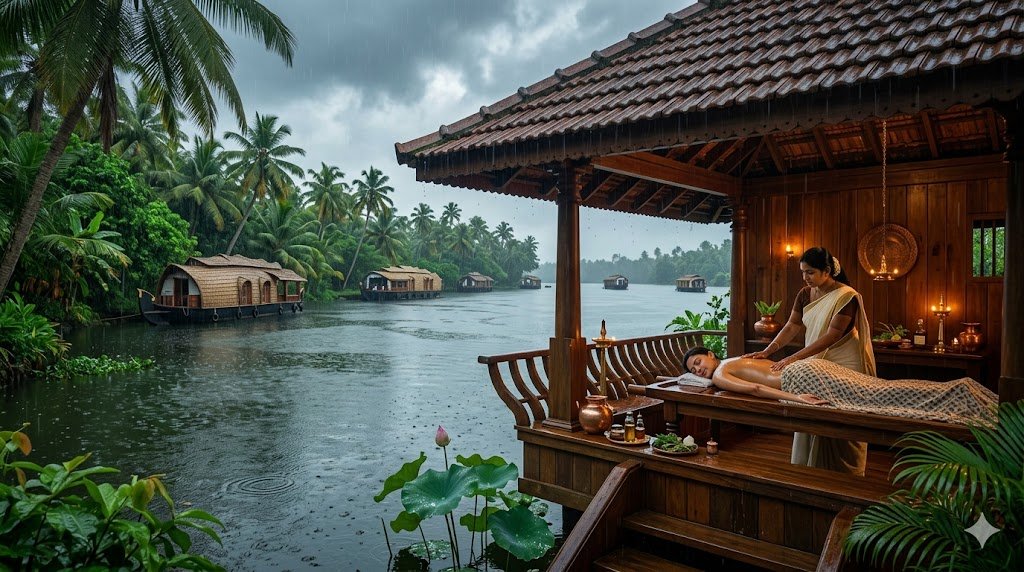
As the scorching Indian summer gives way to the rhythmic drumming of rain, a profound transformation sweeps across the landscape of Kerala. The parched earth drinks deeply, the foliage erupts into brilliant, impossible shades of emerald, and the air becomes heavy with the intoxicating scent of petrichor. But this seasonal shift brings more than just a change in the weather; in “God’s Own Country,” the monsoon—specifically the Malayalam month of Karkidakam (mid-July to mid-August)—heralds the season of holistic healing.
For thousands of years, the ancient science of Ayurveda has prescribed the monsoon season as the absolute best time for the body to undergo deep rejuvenation, detoxification, and healing. While many travelers instinctively flee from the rain, those looking for premium wellness tourism flock to Kerala to experience a physical and spiritual rebirth.
If you are looking to recalibrate your health, reset your mind, and experience the profound benefits of Ayurvedic monsoon treatments, there is no better time than the 2026 rainy season, and absolutely no better place than Kumarakom. Nestled on the serene banks of Vembanad Lake, Kumarakom offers a tranquil, unpolluted, and deeply atmospheric environment that amplifies the healing powers of a true Ayurveda retreat.
In this comprehensive guide, we will dive deep into the science and philosophy of holistic healing, explore exactly why the monsoon season is the ultimate time for an Ayurvedic reset, detail the specific therapies you should seek out, and provide the ultimate 7-day travel itinerary for a life-changing getaway in Kumarakom.
Part 1: What is Ayurveda? The Ancient Science of Life
What is Ayurveda? Ayurveda is a 5,000-year-old holistic medical system originating in India that focuses on preventing disease and balancing the body, mind, and spirit. Translated from Sanskrit, Ayurveda means “The Science of Life” (Ayur = life, Veda = science or knowledge).
Unlike modern allopathic medicine, which often focuses on treating the symptoms of a disease after it has manifested, Ayurveda is fundamentally preventative. It does not separate the physical body from the mind, the spirit, or the environment.
The Theory of the Tridoshas
At the heart of Ayurvedic philosophy is the concept of the Tridoshas—the three fundamental biological energies or humors that govern all physical and mental processes in the body. These doshas are derived from the Five Great Elements (Pancha Mahabhuta): Space, Air, Fire, Water, and Earth.
- Vata (Space and Air): Vata is the energy of movement. It governs breathing, blinking, muscle and tissue movement, pulsation of the heart, and all movements in the cytoplasm and cell membranes. When Vata is in balance, it promotes creativity, flexibility, and vitality. When out of balance, it causes fear, anxiety, abnormal movements, and physical depletion.
- Pitta (Fire and Water): Pitta is the energy of digestion and metabolism. It governs digestion, absorption, assimilation, nutrition, metabolism, and body temperature. In balance, Pitta promotes understanding, intelligence, and a healthy appetite. Out of balance, it arouses anger, hatred, jealousy, and inflammatory disorders.
- Kapha (Earth and Water): Kapha is the energy of structure and lubrication. It supplies the water for all bodily parts, moisturizes the skin, lubricates the joints, and maintains immune function. In balance, Kapha is expressed as love, calmness, and forgiveness. Out of balance, it leads to attachment, greed, lethargy, and congestion.
Prakriti and Vikriti (Your Unique Constitution)
Every individual is born with a unique, unchangeable ratio of these three doshas, known as their Prakriti (constitution). Think of it as your physiological fingerprint. However, throughout our lives, our environment, diet, stress levels, and the changing seasons cause our dosha levels to fluctuate. This current state of imbalance is known as Vikriti.
The entire goal of Ayurvedic treatment is to guide the body from its imbalanced Vikriti back to its original, healthy Prakriti.
Understanding Agni (Digestive Fire) and Ama (Toxins)
Two other crucial concepts are Agni and Ama. Agni is your digestive fire, responsible for transforming the food you eat into the tissues of your body. When Agni is strong, food is digested perfectly.
However, when Agni is weak (which commonly happens during the shift from summer to monsoon), food is only partially digested. This undigested, toxic, sticky residue is called Ama. Ama clogs the channels of the body (shrotas), blocks the flow of energy and nutrients, and is considered the root cause of all disease in Ayurveda.
Part 2: Why is the Monsoon (Karkidakam) the Best Time for Ayurveda?
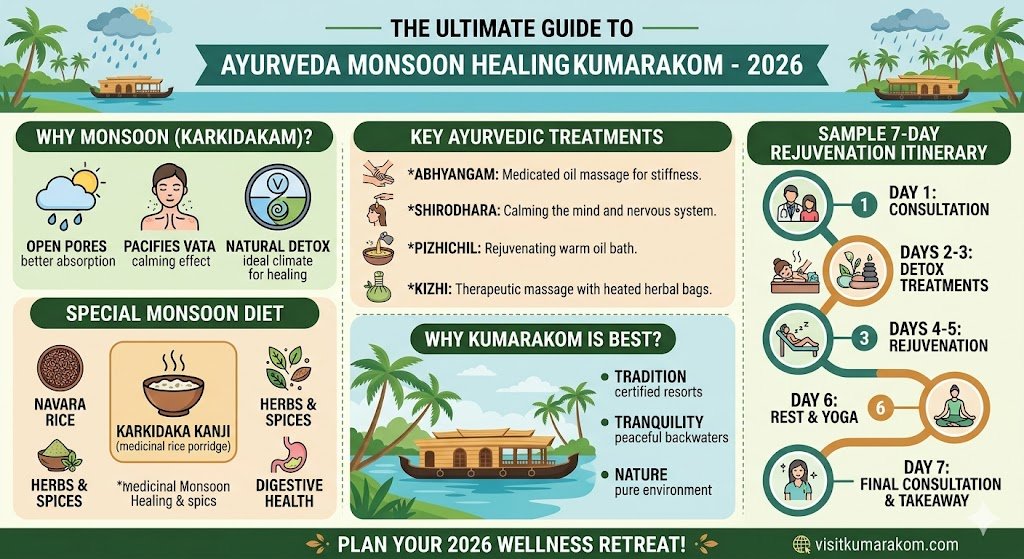
You might wonder: why undergo intensive medical and spa treatments when it’s pouring rain outside? The monsoon is the best time for Ayurveda because the highly humid atmosphere naturally opens the skin’s pores, allowing medicated herbal oils to penetrate deeper into the body’s tissues. In Kerala, the peak of the monsoon coincides with the Malayalam month of Karkidakam (falling in July and August). Today, science and ancient wisdom align to explain exactly why monsoon Ayurveda is so incredibly effective. Here are the four primary reasons:
1. Maximum Absorption Through Open Pores
During the monsoon, the atmosphere in Kerala becomes highly humid. This constant, enveloping moisture acts almost like a natural, gentle steam bath for the entire region. As a result, the pores of the human skin naturally open up and become highly receptive. When medicated herbal oils (Thailams) and pastes are applied to the body during this time, they penetrate deeply into the tissues (Dhatus), far more effectively than they would during the dry, constricted winter or the harsh, sweaty summer.
2. Natural Pacification of the Vata Dosha
According to Ayurvedic texts, the extreme heat of the summer depletes the body and naturally aggravates the Vata dosha. When the sudden cold rains of the monsoon arrive, the body experiences an environmental shock. This exacerbates Vata even further, leading to joint pains, arthritis flare-ups, dry skin, muscle stiffness, and neurological issues. The primary treatment for Vata imbalance is Snehana (oleation/oil therapy) and Swedana (sweating). The cool, rainy environment is the perfect backdrop for these warm, deeply nourishing, oil-based treatments to pacify the chaotic Vata energy.
3. Favorable Temperature for Medicine Retention
In the sweltering heat of the summer, if you apply heavy, medicated oils to the skin, the body’s natural response is to sweat profusely to cool down, washing away therapeutic oils before they absorb. Conversely, during the winter, pores are closed tight. The monsoon provides the perfect “Goldilocks” temperature—cool enough that you do not sweat off the oils, but humid enough that your pores remain wide open.
4. Psychological Receptivity and Rest
Healing requires mental surrender. The dark skies, the persistent sound of rain, and the inability to go out and engage in frantic tourist activities force the mind to slow down. The monsoon naturally induces a state of introspection. When the mind is quiet, the body’s parasympathetic nervous system (the “rest and digest” mode) activates, allowing for profound, cellular-level healing.
Part 3: What Are the Key Ayurvedic Monsoon Treatments?
When you visit an Ayurvedic center in Kumarakom during the monsoon, you undergo highly specific, clinical therapies tailored to your unique doshic imbalance.
To help you understand the therapies you might encounter, here is a quick-reference table of the most prominent treatments utilized during Karkidakam, followed by detailed explanations:
| Treatment Name | Description | Primary Benefit / Target |
|---|---|---|
| Panchakarma | A multi-step deep detoxification process (Vamana, Virechana, Basti, Nasya, Raktamokshana). | Ruthless expulsion of deep-seated Ama (toxins); complete bodily reset. |
| Abhyangam | Synchronized full-body massage using warm, medicated herbal oils. | Pacifies Vata dosha, lubricates joints, stimulates lymphatic circulation. |
| Pizhichil | Continuous pouring of warm medicated oil over the entire body with gentle massage. | Highly effective for arthritis, rheumatism, and severe nervous system disorders. |
| Shirodhara | Continuous, steady stream of warm herbal oil or buttermilk poured over the “third eye” (forehead). | Cures insomnia, profound stress relief, calms the central nervous system. |
| Swedanam | Herbal steam therapy inside a wooden cabinet following an oil massage. | Opens pores to flush out loosened toxins through heavy sweating. |
| Kizhi | Massaging the body with warm, herbal poultices filled with leaves, powders, or rice. | Relieves muscle cramps, reduces stiffness, and deeply nourishes tissues. |
1. Panchakarma (The Five Actions of Detoxification)
What is Panchakarma? Panchakarma is a comprehensive, five-step Ayurvedic detoxification protocol designed to clear deep-rooted toxins (Ama) from the body’s tissues. A full Panchakarma in Kerala can take anywhere from 14 to 28 days. The five traditional actions are:
- Vamana (Emesis): Therapeutic vomiting to clear Kapha toxins.
- Virechana (Purgation): Therapeutic laxative therapy to clear Pitta toxins from the liver and intestines.
- Basti (Enema): The introduction of medicated oils and herbal decoctions into the colon; the absolute best treatment for monsoon Vata disorders.
- Nasya (Nasal Administration): Instilling medicated drops into the nostrils to clear the head and sinuses.
- Raktamokshana (Blood Letting): A specialized treatment to purify the blood for severe skin conditions.
2. Abhyangam (Synchronized Oil Massage)
Abhyangam involves the liberal application of warm, specially prescribed herbal oils all over the body, often performed by two therapists working in perfect synchronization. The strokes are designed to move toxins toward the gastrointestinal tract for elimination. It deeply nourishes the skin, lubricates the joints, and calms the nervous system.
3. Pizhichil (The Royal Oil Bath)
Often referred to as the “treatment of aristocrats,” Pizhichil is a luxurious procedure where liters of lukewarm medicated oil are continuously poured over the entire body in a rhythmic manner from a specific height. It is highly effective for rheumatic diseases, arthritis, and severe nervous system disorders.
4. Shirodhara (Third-Eye Pour)
For those seeking profound mental relaxation, Shirodhara is miraculous. A continuous, steady stream of warm herbal oil or medicated buttermilk is poured over the forehead (the ‘third eye’). This continuous stimulation deeply pacifies the central nervous system, inducing a trance-like state that cures insomnia and stress.
5. Kizhi (Herbal Poultice Massage)
Kizhi involves massaging the body with small, tightly tied linen bags (poultices) filled with heated herbs, powders, or rice. Variations include Elakizhi (medicinal leaves for joint pain), Podikizhi (herbal powders for sluggishness), and Navarakizhi (medicinal red rice for building muscle tissue and skin glow).
Part 4: What is the Ayurvedic Monsoon Diet? (Karkidaka Kanji)
During the monsoon, the atmospheric cold and dampness naturally dampen the body’s internal Agni (digestive fire). Because digestion becomes sluggish, the Ayurvedic monsoon regimen involves a strict dietary shift, centered around Karkidaka Kanji.
The Magic of Karkidaka Kanji
What is Karkidaka Kanji? Karkidaka Kanji (Oushadha Kanji) is a highly specialized, easily digestible medicinal porridge consumed continuously during the monsoon. Its primary purpose is to reignite the digestive fire, boost immunity, and provide easily assimilable nutrition without taxing the gastrointestinal tract.
Key Ingredients usually include:
- Navara Rice: A medicinal, unpolished red rice with high nutritional value native to Kerala.
- Digestive Spices: Cumin, coriander, fenugreek, carom seeds (ajwain), and dry ginger to reduce bloating and stimulate gastric juices.
- Herbal Extracts: Decoctions of powerful herbs like Dashamoola (the roots of ten medicinal trees) and Kurumthotti (excellent for joint health).
- Coconut Milk and Jaggery: Added in small quantities for healthy fats and natural sweetness.
During a retreat, your diet is entirely vegetarian, warm, lightly spiced, and completely devoid of refined sugars, caffeine, and alcohol.
Part 5: Why is Kumarakom the Best Place for Monsoon Ayurveda?
While Kerala has hundreds of Ayurvedic centers, Kumarakom is widely considered the best destination for monsoon Ayurveda due to its silent, unpolluted backwater micro-climate, which perfectly supports the deep relaxation and high humidity needed for treatments.
Located in the Kottayam district on Vembanad Lake, here is why Kumarakom stands head and shoulders above beach towns or cities:
1. Unmatched Tranquility and Silence
Healing requires profound peace. Beach destinations like Varkala or Kovalam can be noisy with crashing monsoon waves, and cities are congested. Kumarakom is isolated and deeply silent. The rhythmic lapping of the Kerala backwaters and the mesmerizing drumming of rain instantly lower cortisol levels.
2. The Ideal Backwater Micro-Climate
Surrounded by the massive Vembanad Lake and lush green paddy fields, Kumarakom maintains pure air and a highly stable, humid micro-climate—the exact conditions required to keep skin pores open for oil absorption.
3. Concentration of Premium, Authentic Ayurvedic Resorts
Kumarakom is famous for high-end hospitality. It boasts some of the finest, most rigorously certified Ayurvedic resorts in the world. These are not basic spas; they are fully equipped holistic hospitals functioning within five-star luxury environments, led by BAMS-certified doctors.
4. Access to Fresh, Local Medicinal Herbs
The rural, fertile nature of Kottayam district means Kumarakom resorts have immediate access to incredibly potent medicinal herbs grown locally, with many properties maintaining their own organic herbal gardens.
Part 6: The Ultimate 7-Day Ayurvedic Travel Itinerary (2026 Monsoon)
If you are planning your 2026 wellness trip, aim to travel between mid-July and mid-August 2026 to catch the peak of the Karkidakam healing window. Here is a curated 7-day itinerary designed for deep rejuvenation.
Day 1: Arrival and The First Pulse
- Morning: Arrive at Cochin International Airport (COK). A private car transfers you to Kumarakom (a scenic 2-hour drive).
- Afternoon: Check into your chosen Ayurvedic resort.
- Late Afternoon: Your initial consultation with the Chief Ayurvedic Physician, involving Nadi Pariksha (pulse diagnosis) to draw up your customized treatment and diet plan.
- Evening: Enjoy a light, warm, Ayurvedic dinner. Early to bed.
Day 2: Initiation into Oleation
- Morning (6:30 AM): Gentle, restorative Yoga and Pranayama facing Vembanad Lake.
- Late Morning Treatment: Your first major therapy. A full-body Abhyangam (synchronized massage) followed by Swedanam (herbal steam bath).
- Afternoon: Rest in your room. No heavy physical activity.
- Evening: Take a covered canoe ride through the narrow, rain-washed canals of Kumarakom.
Day 3: Mental Reset and The Third Eye
- Morning: Yoga and meditation.
- Morning Treatment: Today focuses on the mind with Shirodhara. The continuous stream of warm oil on your forehead will likely send you into a deep sleep.
- Afternoon: A guided nature walk (with umbrellas) through the Kumarakom Bird Sanctuary.
Day 4: Dissolving the Aches and Pains
- Morning: Yoga with a focus on joint mobility.
- Morning Treatment: Elakizhi. Warm, herbal leaf poultices are pounded rhythmically over your body, providing immense relief from stiffness and joint aches.
- Afternoon: Attend an educational session with the Ayurvedic chef to learn about the spices used in Karkidaka Kanji.
Day 5: The Royal Rejuvenation
- Morning Treatment: The luxurious Pizhichil (oil bath). Liters of warm oil cascade over your body for the pinnacle of physical relaxation.
- Lunch: A serving of the traditional Karkidaka Kanji to stoke your internal fire.
- Late Afternoon: A serene sunset cruise on Vembanad Lake in a traditional Kettuvallam (houseboat).
Day 6: Building Strength and Glow
- Morning Treatment: Navarakizhi. Warm, milk-and-rice poultices massage your body, a highly rejuvenating treatment that builds strength back into the tissues.
- Afternoon: Free time to explore the resort’s organic herbal gardens.
- Evening: Enjoy a quiet, contemplative evening. Reflect on the physical and mental shifts.
Day 7: The New You
- Morning: Final Yoga session. You will notice increased flexibility and a quieter mind.
- Morning Treatment: A final, soothing Abhyangam to seal in the benefits of the week.
- Late Morning: Final consultation with the doctor to receive your post-treatment regimen and dietary advice.
- Afternoon: Check out and transfer back to Cochin Airport.
Part 7: Where to Stay – Best Kumarakom Hotels & Resorts for Ayurveda
To ensure your treatments are authentic and safe, you must choose resorts that have dedicated Ayurvedic centers certified by the Government of Kerala (look for “Green Leaf” or “Olive Leaf” certifications).
Because 2026 monsoon slots fill up months in advance, early booking is highly recommended.
For an extensively curated and updated list of the finest properties offering verified Ayurvedic treatments, luxury amenities, and breathtaking views of Vembanad Lake, check out the comprehensive guide here: 👉 List for Best Kumarakom Hotels & Resorts
To dive deeper into the culture, local food, hidden gems, and travel tips for this backwater paradise before you plan your trip, explore the insights available here: 👉 Kumarakom Blog
Frequently Asked Questions (FAQs) About Monsoon Ayurveda
1. Is it safe to travel to Kerala during the monsoon for Ayurveda? Yes, it is entirely safe and highly recommended to travel to Kerala during the monsoon for Ayurvedic treatments. Premium resorts in Kumarakom are fully equipped for indoor wellness retreats, ensuring you remain comfortable and safe regardless of the heavy rains outside.
2. How many days do I need for a proper Ayurvedic treatment? For a comprehensive, deep-tissue Panchakarma detox, a minimum of 14 to 21 days is medically recommended. However, if you are looking for a general wellness, stress-relief, and rejuvenation retreat, a 7 to 10-day itinerary is sufficient to see significant health benefits.
3. Will I lose weight during a monsoon Ayurveda retreat? Yes, it is common to lose weight, though it is not the primary goal of general rejuvenation. Specialized treatments like Udwarthanam (herbal powder massage), combined with the strict, light Ayurvedic diet, naturally reduce bloating, water retention, and excess fat.
4. Why is Kumarakom better than beach destinations for Ayurveda? Kumarakom is better than beach destinations because its backwater environment offers profound silence, zero coastal winds, and a highly stable, humid micro-climate. This is optimal for keeping skin pores open and allowing the nervous system to fully relax during therapies.
5. What is the Karkidakam month in Kerala? Karkidakam is the last month of the traditional Malayalam calendar, usually falling between mid-July and mid-August. It corresponds with the peak of the monsoon season and is historically dedicated to rest, prayer, and intensive Ayurvedic health regimens.
Conclusion: Embrace the Rain, Heal the Body
The monsoon in Kerala is not a time to seek shelter; it is a time to seek healing. While the rest of the world views the rain as a disruption, the ancient science of Ayurveda views it as a profound biological opportunity. The cool, damp, and atmospheric month of Karkidakam offers the perfect environmental alchemy to reset your body, purge toxins, and quiet a chaotic mind.
By choosing Kumarakom for your 2026 Ayurvedic retreat, you are investing in a comprehensive physiological and psychological reset. The unparalleled silence of the backwaters, the luxury of the certified resorts, and the pure, unpolluted air make Kumarakom the undisputed champion of monsoon wellness destinations.
So, when the skies darken and the rains begin to fall over India, don’t hide indoors. Book your ticket to God’s Own Country, let the warm herbal oils work their ancient magic, and allow the monsoon of Kumarakom to wash you anew.
0 Comment