

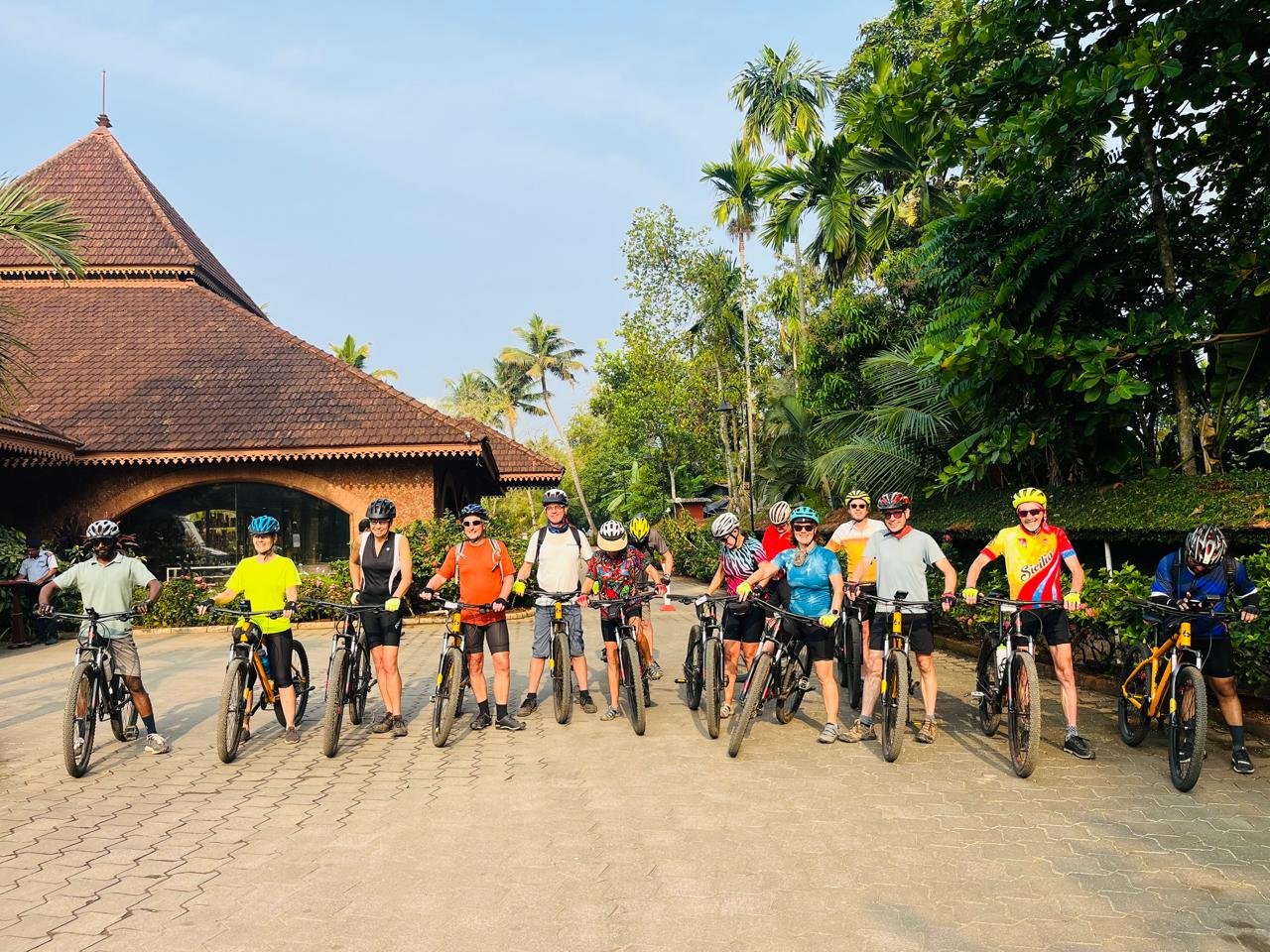

Kumarakom, Kerala: The serene backwaters of Kumarakom recently played host to an enthusiastic cycling group from the UK, who embarked on an unforgettable journey through the lush landscapes and tranquil villages of God’s Own Country. Their visit highlights the growing appeal of Kerala as a premier cycling destination, offering a unique blend of adventure, culture, and breathtaking natural beauty.
The group, known for their love of scenic routes and immersive cultural experiences, spent several days exploring the intricate network of canals, paddy fields, and coconut groves that define the Kumarakom region. Their meticulously planned itinerary allowed them to not only witness the captivating charm of the backwaters but also engage with the local community, savor authentic Kerala cuisine, and experience the rhythmic pace of life in this idyllic corner of the world.
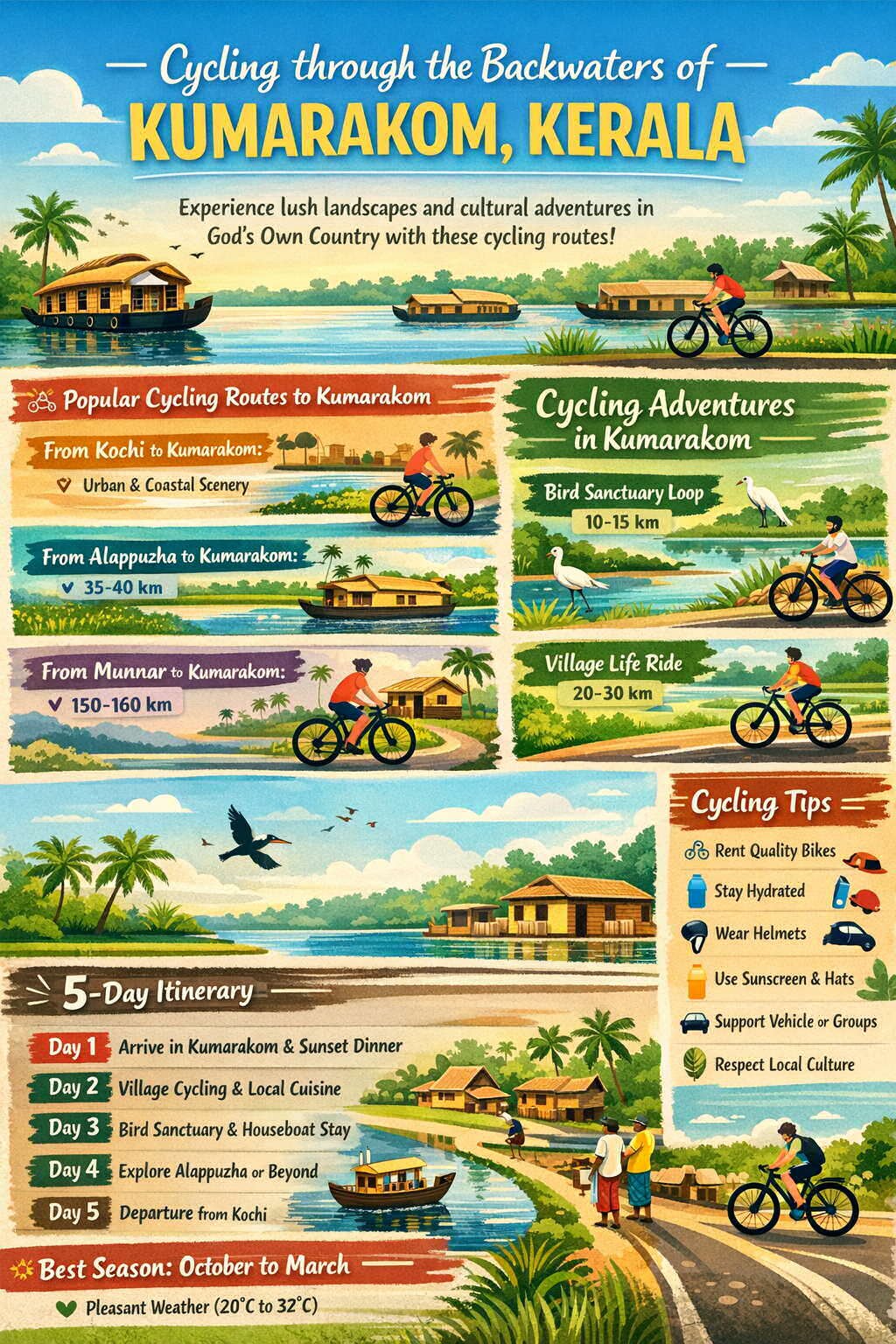
Cycling Routes to Kumarakom: A Journey Through Kerala’s Heart
Reaching Kumarakom by bike is an experience in itself, offering diverse routes that cater to different preferences and fitness levels. Here are some popular cycling routes that lead to this backwater paradise:
1. From Kochi (Cochin International Airport – COK) to Kumarakom (Approx. 70-80 km)
This is one of the most common starting points for international visitors.
- Route: Start from Kochi and head south towards Alappuzha (Alleppey) via NH66. Before reaching Alappuzha, you can take a detour towards Kumarakom.
- Terrain: Mostly flat, well-paved roads, with some stretches passing through towns and rural areas.
- Scenery: Urban landscapes transitioning into coastal towns, eventually giving way to verdant paddy fields and backwater villages as you approach Kumarakom.
- Highlights: Cycling through bustling Kochi, glimpses of the Arabian Sea, and the gradual immersion into Kerala’s rural charm.
2. From Alappuzha (Alleppey) to Kumarakom (Approx. 35-40 km)
Ideal for those who want a shorter, more concentrated backwater cycling experience.
- Route: From Alappuzha, head east across the Pamba River, cycling through scenic villages and past numerous canals.
- Terrain: Flat and generally well-maintained village roads, offering a quintessential backwater cycling experience.
- Scenery: Lush green paddy fields, coconut groves, small bridges over canals, and glimpses of traditional Kerala homes.
- Highlights: The close proximity to the backwaters, the chance to interact with local fishermen and farmers, and the serene atmosphere.
3. From Munnar to Kumarakom (Approx. 150-160 km)
A more challenging but incredibly rewarding route for experienced cyclists, combining mountain and backwater landscapes.
- Route: This route involves descending from the Western Ghats. Start from Munnar and head towards Adimali, then Kothamangalam, Muvattupuzha, and finally towards Kumarakom.
- Terrain: Significant descents from Munnar, followed by rolling hills and flatter sections as you approach the plains.
- Scenery: Starting amidst the stunning tea plantations and misty mountains of Munnar, transitioning through rubber and spice plantations, and eventually reaching the tropical backwaters.
- Highlights: The dramatic change in landscape, the thrill of mountain cycling, and the diverse cultural experiences along the way.
Cycling Routes within and from Kumarakom: Unveiling Local Treasures
Once in Kumarakom, the cycling adventures don’t stop. The region offers a plethora of local routes perfect for half-day or full-day explorations.
1. Kumarakom Bird Sanctuary Loop (Approx. 10-15 km)
- Route: Start from your accommodation and cycle around the perimeter of the Kumarakom Bird Sanctuary. You can also venture into some of the smaller roads leading to the sanctuary.
- Scenery: Lush greenery, glimpses of the backwaters, and the chance to spot various migratory and resident birds.
- Highlights: Birdwatching, peaceful village roads, and close encounters with nature.
2. Village Life Exploration (Approx. 20-30 km)
- Route: Head inland from the main tourist areas, exploring the winding village roads that crisscross through paddy fields, coconut groves, and small hamlets.
- Scenery: Authentic rural Kerala life, traditional homes, local markets, and interactions with friendly villagers.
- Highlights: Experiencing the unhurried pace of life, witnessing coir making, fishing, and other traditional activities.
Tip: Stop at a local tea shop for a refreshing chai and snacks.
3. Pathiramanal Island Excursion (Approx. 20-25 km round trip + ferry)
- Route: Cycle to a nearby ferry point (e.g., near Kavanattinkara) and take a short ferry ride to Pathiramanal Island. Explore the island on foot (cycling might be difficult on the island itself).
- Scenery: The journey to the ferry point offers scenic backwater views, while the island is a haven for migratory birds and lush vegetation.
- Highlights: A unique island experience, birdwatching, and a peaceful escape.
Suggested 5-Day Itinerary for a Cycling Group in Kumarakom
Here’s a sample itinerary inspired by the UK group’s visit, offering a blend of cycling, relaxation, and cultural immersion:
Day 1: Arrival in Kochi & Transfer to Kumarakom
- Arrive at Kochi International Airport (COK).
- Transfer to Kumarakom by road (approx. 2-hour drive). For those keen on cycling, consider cycling directly from Kochi if you arrive early.
- Check into your backwater resort or a traditional homestay.
- Evening: Relax, enjoy the sunset over the backwaters, and savor a traditional Kerala dinner.
Day 2: Backwater Cycling & Village Life
- Morning: Enjoy a hearty Kerala breakfast.
- Cycling: Embark on a leisurely 20-30 km cycle ride through the local villages of Kumarakom. Explore paddy fields, coconut groves, and observe local life.
- Lunch: Enjoy authentic local cuisine at a village eatery.
- Afternoon: Relax by the backwaters, optional Ayurvedic massage, or a short canoe ride.
- Evening: Cooking demonstration of Kerala cuisine, followed by dinner.
Day 3: Bird Sanctuary & Houseboat Experience
- Morning: Cycling: Ride to the Kumarakom Bird Sanctuary (approx. 5-7 km). Spend time birdwatching.
- Afternoon: Check into a traditional Kettuvallam (houseboat) for an overnight cruise on the Vembanad Lake.
- Enjoy lunch and dinner prepared on board, while cruising through the serene backwaters.
- Evening: Witness a spectacular sunset from the houseboat.
Day 4: Exploring Beyond Kumarakom
- Morning: Disembark from the houseboat.
- Cycling: Option to cycle to Alappuzha (Alleppey) along a scenic route (approx. 35-40 km) or explore more of the Kumarakom hinterland.
- Lunch: In Alappuzha or a local restaurant en route.
- Afternoon: If in Alappuzha, explore the famous canals and perhaps a coir factory. Return to Kumarakom in the late afternoon (via support vehicle if not cycling back).
- Evening: Farewell dinner with a cultural performance (Kathakali or Mohiniyattam).
Day 5: Departure
- Morning: Enjoy a final Kerala breakfast.
- Depending on your flight schedule, either cycle a short loop around your accommodation or relax.
- Transfer to Kochi International Airport for your departure.
Best Season to Visit Kumarakom for Cycling
The most ideal time for cycling in Kumarakom and Kerala generally is during the winter months, from October to March.
- October to February: The weather is pleasant with moderate temperatures (20°C to 32°C) and low humidity. This makes it perfect for outdoor activities like cycling, as the heat and humidity are less intense.
- March: While still good, temperatures start to rise towards the end of March, signaling the onset of summer.
- Monsoon (June to September): Heavy rainfall can make cycling challenging and uncomfortable. Roads can also be slippery.
- Summer (April to May): High temperatures and humidity can be very taxing for cycling.
Key Tips for Cyclists:
- Bike Rentals: Several tour operators in Kerala offer good quality bike rentals.
- Support Vehicle: For groups, a support vehicle is highly recommended for luggage and mechanical assistance.
- Hydration: Always carry plenty of water.
- Sun Protection: Sunscreen, hats, and sunglasses are essential.
- Helmets: Always wear a helmet for safety.
- Local Etiquette: Be mindful of local traffic and pedestrians.
- Flexibility: Be open to spontaneous stops and interactions.
0 Comment