

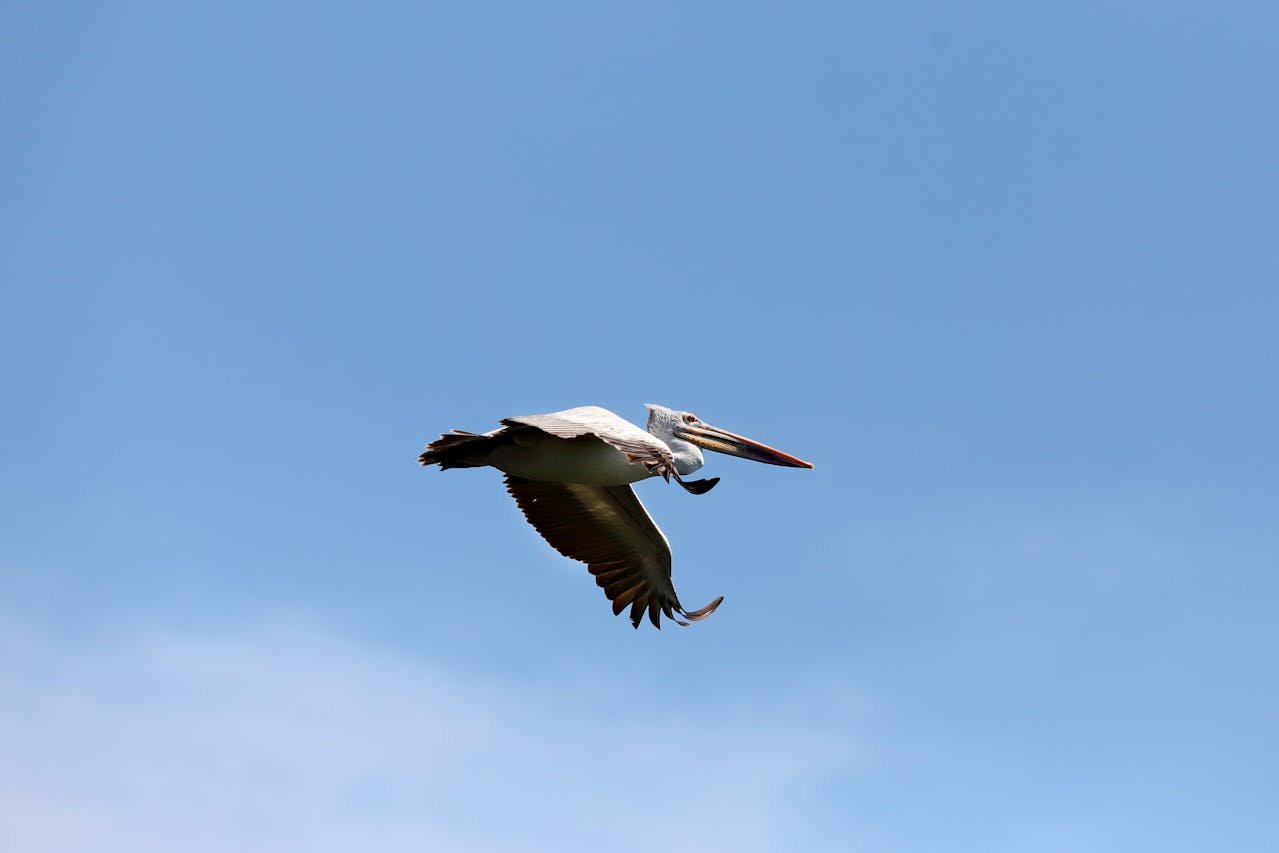

Just before sunrise in Kumarakom, the sky behaves differently. It does not simply brighten. It rearranges itself. Shapes appear where there were none moments before. A line curves. A cluster breaks apart. Something crosses overhead with intention, as if following a route only it remembers.
This is what birdwatching in Kumarakom feels like, especially for beginners. You are not identifying species from a checklist. You are watching movement write meaning into the air. The sky becomes a map, and the birds are not decorations. They are travelers, commuters, seasonal residents, and occasional wanderers passing through a watery crossroads in Kerala.
Kumarakom Bird Sanctuary sits along the edge of Vembanad Lake, stitched together by canals, mangroves, and quiet paths that invite patience. It is famous, yes, but not in a loud way. Nothing here asks to be rushed. Birds arrive according to ancient schedules that ignore human calendars. They leave the same way.
For someone new to birdwatching, this place offers a gentle initiation. You do not need expertise. You do not need the right gear. You need time, attention, and a willingness to watch without demanding immediate explanations. Kumarakom rewards that kind of curiosity. It turns looking into listening, and listening into understanding, slowly, without pressure.
By the end of a morning here, you realize something subtle but lasting has shifted. The sky is no longer empty space. It is a record of journeys still in progress.
Where Water, Wind, and Wings Converge
Understanding Kumarakom’s Geography Without a Map
Kumarakom makes sense before it is explained. Water is everywhere, but it never feels chaotic. Narrow canals slip between coconut palms. The lake opens wide and reflective, catching light and sound. Patches of mangroves rise like careful punctuation marks along the shoreline.
For birds, this landscape is not scenic. It is functional. Shallow waters mean food close to the surface. Reeds provide cover from wind and predators. Trees leaning over canals become resting points where wings can fold without urgency.
For humans, especially beginners, this geography simplifies birdwatching. You are not scanning endless forests or cliffs. Birds appear where water meets land, again and again. Your eyes learn quickly where to rest.
Walking paths inside the sanctuary follow natural edges. You do not feel separated from the habitat. You feel threaded through it. Every turn offers a slightly different angle on the same elements: water, leaves, sky, motion.
This repetition is important. It trains attention. After a while, you start noticing what changes rather than what stays the same. A ripple that was not there before. A sound that interrupts the usual rhythm. A shape moving against the flow of the morning breeze.
Why Birds Choose Kumarakom Again and Again





Migratory birds do not choose destinations at random. Kumarakom sits along routes that stretch across continents, connecting cold northern breeding grounds with warmer southern refuges. For many species, this wetland is not the final goal. It is a pause, a place to rest, feed, and recover before continuing.
Food is the primary reason. Fish, insects, and aquatic plants are abundant and predictable. Water levels remain relatively stable. Human activity, while present, moves slowly enough to be tolerated.
There is also safety in familiarity. Birds that survive a migration remember where conditions were favorable. They return, season after season, tracing invisible highways in the sky that lead them back to these same waters.
For a beginner watching from the ground, this repetition becomes comforting. You realize you are witnessing a pattern much older than tourism, photography, or even written history. The birds are not performing. They are continuing a story that has been unfolding here for centuries.
When the World Arrives on Feathers
Migratory Birds You Might Meet as a Beginner
Some birds arrive with reputations. The Siberian crane, when it appears, carries with it the weight of distance. It has traveled thousands of kilometers, crossing borders that exist only for humans. Seeing one standing calmly in shallow water feels almost unreal, like encountering a myth that decided to become practical.
More commonly, beginners encounter egrets and herons first. Tall, patient, and unmistakably elegant, they stand like punctuation marks along the water’s edge. You do not need to know their exact names to appreciate their behavior. The stillness. The sudden strike. The way they reposition themselves without fuss.
Darters, with their snake-like necks, offer a lesson in misdirection. For a moment, they look like something else entirely. Then they surface, wings spread wide to dry, transforming confusion into clarity.
What makes Kumarakom ideal for beginners is not the rarity of species, but the visibility of behavior. Birds here do things slowly enough to be noticed. Feeding, resting, calling to one another. You start recognizing individuals not by labels, but by habits.
Over time, you notice seasonal shifts. Some birds appear only in certain months. Others seem to fade away without ceremony. Migration reveals itself not as a dramatic arrival, but as a gentle accumulation of presence.
Resident Birds That Never Left
While migratory visitors bring drama and distance, resident birds provide continuity. Kingfishers announce themselves with flashes of color and sudden dives. They are quick, precise, and unapologetically local.
Cormorants gather in groups, often drying their wings in postures that resemble abstract sculptures. Owls remain mostly hidden, but their presence is felt in the quiet attentiveness of the landscape.
These resident species anchor the sanctuary. They make the place feel lived in rather than visited. For beginners, they offer repeated encounters that deepen familiarity. Seeing the same bird across different days, different times, different moods builds a relationship that no field guide can replicate.
Together, residents and migrants create a layered experience. The sanctuary becomes both home and crossroads. Stability and movement coexist without conflict.
Birdwatching Without Binocular Anxiety
How Beginners Can Watch Without Knowing Names
Many people hesitate to try birdwatching because they assume it requires expertise. Names. Equipment. Technical knowledge. Kumarakom quietly dismantles that assumption.
Here, watching begins with listening. Before you see a bird, you often hear it. A call that cuts through the background hum. A flutter that suggests movement just out of sight. Your ears guide your eyes.
Flight patterns become identifiers. Some birds move in straight, purposeful lines. Others drift and circle. Some stay low over the water. Others cut across the sky at surprising heights. These patterns are easier to remember than names, and far more intuitive.
Behavior matters more than classification. A bird feeding repeatedly in the same spot. Another guarding a small territory. A group moving together with subtle coordination. These observations create understanding without requiring terminology.
Let curiosity lead. Let questions remain unanswered for a while. The point is not to label, but to notice. In Kumarakom, that is enough.
Best Times of Day and Year to Visit
Morning is the sanctuary’s most generous hour. Light is soft. Birds are active. The air carries sound clearly before heat and movement blur it. Late afternoon offers a different mood, slower, warmer, with longer shadows and quieter waters.
Season matters, but not in an exclusive way. Winter months bring the highest concentration of migratory birds. This is when the sanctuary feels busiest, not with people, but with life.
Monsoon changes everything. Rain reshapes reflections. Greens deepen. Some birds retreat, others thrive. Watching during this time feels more intimate, less about abundance and more about atmosphere.
For beginners, any season works. Each offers a different lesson in how life adapts to rhythm and change.
The Sanctuary as a Living Storybook
Sounds, Silences, and Small Moments
Birdwatching in Kumarakom is not constant excitement. It is composed of pauses. Long stretches where nothing obvious happens. Then, suddenly, something does.
A wingbeat overhead. A splash. A call that echoes longer than expected. These moments feel amplified because they emerge from quiet.
Silence here is not empty. It is full of anticipation. You become aware of your own movement, your own breathing. Watching birds becomes a practice in restraint. The less you interfere, the more you see.
Small moments accumulate. A bird adjusting its feathers. Another shifting position to catch light. A brief interaction between two individuals that suggests familiarity or rivalry.
These details would be easy to miss elsewhere. In Kumarakom, they are the main event.
Why This Place Changes How You See Travel
Many destinations demand attention. Kumarakom invites it. Birdwatching here reframes travel as observation rather than consumption.
You are not collecting experiences. You are participating in a moment that would exist whether you were present or not. That realization is strangely freeing.
Birds become fellow travelers rather than attractions. They arrive, rest, and leave according to needs that mirror our own in abstract ways. Rest. Safety. Sustenance. Direction.
Leaving the sanctuary, you carry that perspective with you. Skies elsewhere feel different. Empty spaces gain potential. You start noticing movement where you once saw none.
Frequently Asked Questions
Do I need binoculars for birdwatching in Kumarakom?
Binoculars are helpful but not necessary. Many birds in Kumarakom are visible to the naked eye due to open landscapes and close proximity. Beginners often find that watching behavior without magnification builds confidence first, with binoculars becoming useful later.
Is Kumarakom suitable for first time birdwatchers?
Yes. The sanctuary’s layout, visibility, and diversity make it especially welcoming for beginners. You can enjoy the experience without technical knowledge, guided by curiosity and patience rather than expertise.
What is the best season for migratory birds in Kumarakom?
Winter months typically see the highest number of migratory visitors. Cooler temperatures and stable water levels create ideal conditions. That said, each season offers unique observations and moods.
Can children enjoy birdwatching here?
Absolutely. Kumarakom works well for children because birds are visible, active, and varied. Framing the experience as a story or treasure hunt rather than a lesson keeps it engaging and memorable.
Conclusion: Reading the Sky Before It Moves On
Birdwatching in Kumarakom does not end when you leave the sanctuary. It lingers. The habit of looking upward, of tracking movement, of recognizing that the sky carries stories continues long after.
Here, the sky truly becomes a map. Not one drawn with borders or labels, but one traced by wings, pauses, and returns. Birds arrive bearing the memory of distant places. They leave without ceremony, trusting that the route will still be there next year.
For beginners, this is the gift Kumarakom offers. An introduction not to birdwatching as a hobby, but to attention as a way of being. You learn that understanding does not always require names. Sometimes, it begins with simply noticing.
When you step away from the water’s edge and the paths fall quiet behind you, the sky remains overhead, still in motion. And once you have learned to read it, you never quite stop.
0 Comment